
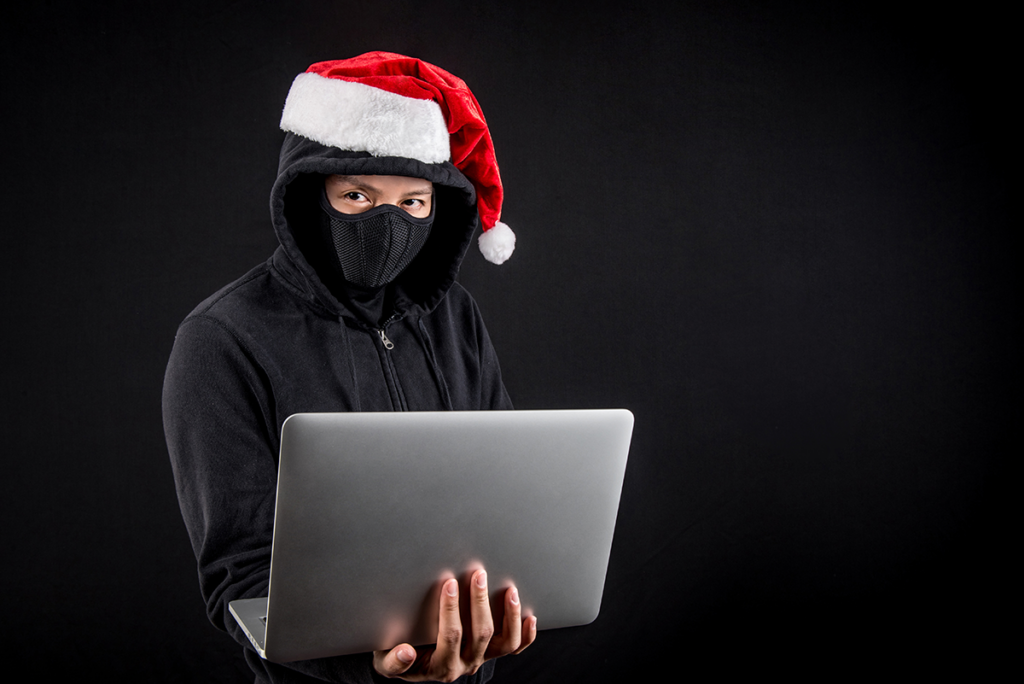
Security habits slip in December, and it is rarely because people stop caring. Staff are closing out the year, covering for coworkers on PTO, traveling and sorting through a flood of shipping and order emails. Criminals plan around exactly that.
For Kentucky businesses that handle patient records, client financials or defense contract data, one rushed click can become a reportable breach. Before the holidays, take ten minutes to reset expectations with your team around the five situations below.
Why is the end of the year a cybersecurity and compliance risk?
Because distraction lowers the guard that compliance depends on. The FBI’s Internet Crime Complaint Center received 1,008,597 complaints in 2025, with reported losses of $20.877 billion, a 26% increase over 2024, according to its 2025 IC3 Annual Report. Kentuckians alone filed 9,414 complaints reporting $119,685,861 in losses. HIPAA, CMMC and the FTC Safeguards Rule do not take holidays, either.
How should employees handle an urgent payment or data request?
Slow down and verify it through a separate, trusted channel. Urgency is a scammer’s favorite tool, and it blends in when everyone is racing a deadline. Watch for messages like these:
· “I’m about to board a flight. Please send the vendor payment before 3 p.m.”
· “Our banking details changed. Use the new account for the year-end invoice.”
· “Can you email me the employee tax file today? I’m out until January.”
Business email compromise, the scam behind requests like these, cost victims $3,046,598,558 in 2025, according to the same IC3 report. If a request involves money or sensitive data, call the person at a number you already have, not one in the message. Nobody should be penalized for taking an extra minute to check.
Is it safe to work from hotel, airport or coffee shop Wi-Fi?
Only when staff follow your remote access rules. Public networks, personal devices and shadow IT (apps used for work that the company has not approved) all multiply during travel season. Before people leave, confirm which devices may open patient or client data, require MFA for remote access and remind everyone which apps are approved. Strong network security makes those rules easier to follow.
How can staff spot a holiday phishing email?
Look for pressure, requests for information and links that are almost right. CISA’s guidance on how to recognize and report phishing flags urgent or emotional language, requests for personal or financial information, untrusted shortened URLs and incorrect email addresses. It also warns that AI now lets some phishing emails arrive with perfect grammar. When a shipping or order notice looks real, go to the retailer’s site directly instead of clicking.
The stakes are real. In September 2026, HHS announced that Ambry Genetics would pay $700,000 after a phishing attack exposed 225,000 patients’ health data, one of many cases on its list of HIPAA resolution agreements. Our free weekly cybersecurity tips are an easy way to keep these lessons fresh.
Who should employees contact when something feels off?
A named person, through a process everyone already knows. Decide now who receives reports of suspicious messages, what happens if someone clicks a bad link and who calls your IT support provider. The FTC Safeguards Rule requires covered businesses to keep a written incident response plan; our FTC Safeguards Rule compliance team can help you build one. For businesses outside HIPAA and the Gramm-Leach-Bliley Act, Kentucky’s breach law, KRS 365.732, requires notifying affected Kentucky residents “in the most expedient time possible and without unreasonable delay.”
Does your team need another hour-long training before the holidays?
Probably not. A short, practical reminder works better in the last weeks of the year: slow down, verify unusual requests, connect safely, think before clicking and report anything odd. Leave the technical controls to leadership and your IT team. For healthcare practices, that reminder also supports ongoing HIPAA compliance.
As a managed IT services and computer support provider, iSAFE Complete helps Kentucky businesses check remote access, device policies and reporting steps before travel season begins. Schedule a 10-minute discovery call and let’s take a closer look.
Call us at 859-200-0428 or visit our website isafecomplete.com.
References
1. Federal Bureau of Investigation. “2025 IC3 Annual Report.” https://www.ic3.gov/AnnualReport/Reports/2025_IC3Report.pdf
2. U.S. Department of Health and Human Services. “Resolution Agreements and Civil Money Penalties.” https://www.hhs.gov/hipaa/for-professionals/compliance-enforcement/agreements/index.html
3. Federal Trade Commission. “FTC Safeguards Rule: What Your Business Needs to Know.” https://www.ftc.gov/business-guidance/resources/ftc-safeguards-rule-what-your-business-needs-know
4. Cybersecurity and Infrastructure Security Agency (CISA). “Recognize and Report Phishing.” https://www.cisa.gov/secure-our-world/recognize-and-report-phishing
5. Kentucky General Assembly. “KRS 365.732: Notification to affected persons of computer security breach.” https://apps.legislature.ky.gov/law/statutes/statute.aspx?id=43326